

Beyond AI: Why Human-Crafted Logos Offer True Originality & Brand Protection
At Logo Design NYC, we’ve observed the rapid evolution of Artificial Intelligence (AI), and the industry, much like individual professionals, is navigating how to best integrate it. There are those who embrace AI tools for every possible task, and then there are those who approach it with a more cautious, discerning eye.
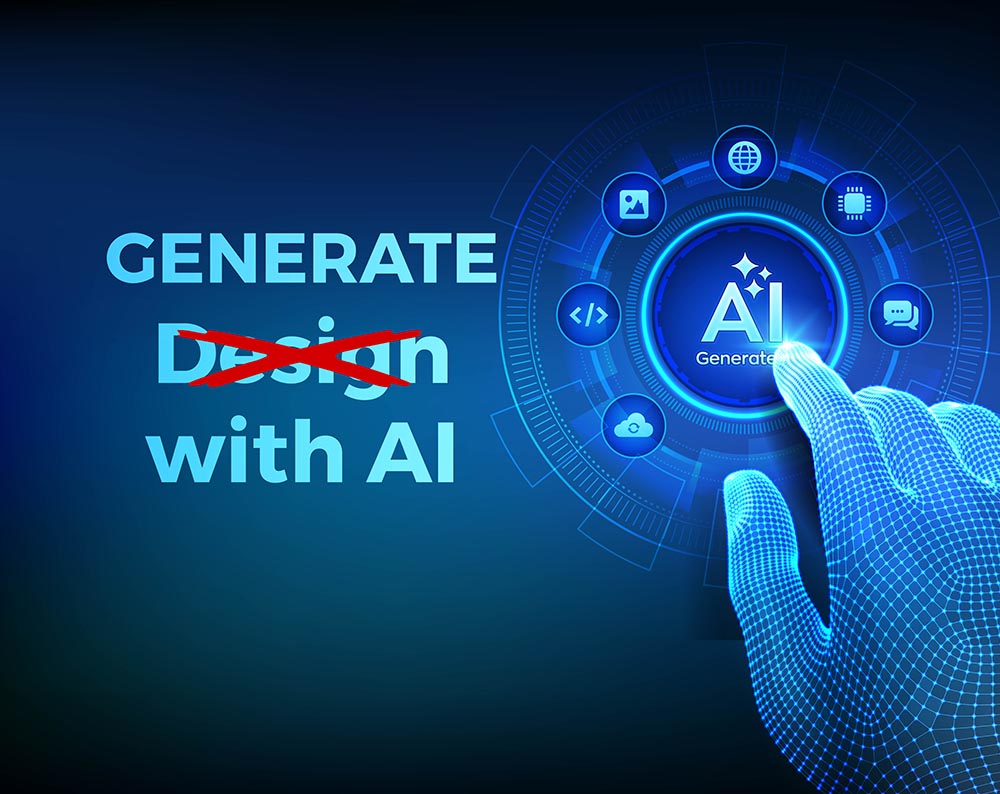
The rise of AI tools has made it easier than ever to generate visuals instantly — logos, icons, mockups, even full website layouts. But this accessibility has created a dangerous misconception: that design is simply about creating images. It isn’t. Design is about solving problems with intention, strategy, and clarity. Something AI cannot do.
Overall, your brand needs strategy — not generated randomness. Here’s why you should consider collaboration with a human designer…
1. No Originality = No Ownership
AI models are trained on massive datasets of existing images. They generate results by recombining what they’ve learned — not by creating something new.
This creates legal and creative risks:
- You cannot prove authorship
- You may unintentionally mimic an existing brand
- Your logo may be rejected in a trademark application
Businesses that rely on AI for branding often discover too late that they lack legal ownership of their identity.
2. AI Doesn’t Understand Your Business
The conversation around AI in design often centers on speed and cost, but true value lies in strategic foundation, not just quick output. While generative AI excels at producing imagery rapidly, it fails at the most critical function of branding: understanding the “why.” AI operates in a vacuum; it cannot feel, cannot empathize, and therefore cannot grasp the emotional foundation of a brand, nor can it factor in the intentionality of a company’s mission, values, or multi-year growth strategy. A designer, conversely, translates the human promise of your brand into a visual language, ensuring that the chosen aesthetic aligns with your core ethical commitments and the subconscious feelings you aim to evoke in your audience.
The problem is compounded by AI’s blindness to competitive strategy and audience nuance. While you can feed an algorithm demographic data, it misses the crucial cultural context, local humor, and evolving social literacy required for genuine connection. When relying on existing visual patterns, AI risks creating a “sea of sameness,” pulling from common imagery that prevents your brand from standing out in a crowded market. It lacks the ability to study your competitors and intentionally break those visual clichés, which is the primary driver of effective differentiation.
Ultimately, a designer is an irreplaceable strategic partner and translator. Their work is defined not by the automated product, but by a rigorous process of listening, challenging, interpreting, and researching the qualitative factors of your business. They provide the necessary strategic rationale—the “why” behind every design choice—ensuring that the final logo or website is a deliberate step toward realizing your future goals. AI is a powerful tool for execution, but the human designer remains the Maestro who provides the vision, empathy, and strategic intelligence that no automated tool can replicate.
3. AI Makes Images. Designers Build better brands
A brand identity includes:
- Logo variations
- Typography
- Color systems
- Layout rules
- Iconography
- Digital and print guidelines
- Usage principles
- AI cannot produce cohesive, thoughtful systems that work across all mediums.
4. Real-World Use Requires Human Expertise
The central flaw in using AI for core branding lies in the fundamental technical gap between screen art and production-ready assets. AI typically generates fixed-resolution raster images, meaning the design is composed of pixels that will fall apart, becoming blurry and blocky, when scaled significantly—such as from a website icon to signage or a billboard. Professional designers, however, use vector graphics defined by mathematical equations, ensuring infinite scalability without any loss of quality. This mastery of file format and resolution is the first line of defense against real-world technical failure.
Furthermore, human expertise is essential for navigating the complex demands of physical production. Designers manage critical steps like converting screen-optimized RGB colors to print-optimized CMYK or specialized Pantone colors, adding necessary bleed for accurate trimming, and simplifying the geometry of the artwork for specialty applications. Methods like embroidery or vinyl cutting require designs to be manually cleaned up and optimized with precise, closed paths that AI-generated complexity cannot provide. Ultimately, the designer acts as the technical quality control officer, delivering not just a logo, but a complete, multi-format asset package with usage guidelines, guaranteeing the brand is technically flawless across all mediums.
5. Design Is a Partnership
Working with a designer provides:
- Feedback loops
- Refinement
- Advice
- Long-term support
- Evolution as your business grows
No AI tool can replace the value of collaboration. AI is an incredible assistant, but it is not a designer. Brands aren’t built from pictures — they’re built from strategy, clarity, and intention. If you want a brand with longevity, recognition, and legal protection, a human designer is essential.
OUR APPROACH
Our philosophy leans towards strategic integration. Internally, we’ve explored AI programs like ChatGPT and Perplexity for tasks that align with their strengths: conducting rapid research, brainstorming initial concepts, and streamlining administrative processes. These tools can certainly accelerate the foundational steps of understanding a client’s industry or generating diverse ideas for discussion. The stakes for these internal, preliminary uses are low, allowing us to leverage AI’s speed without compromising our core values.
However, when it comes to the actual creation of original graphic design, particularly logos and brand assets destined for our clients, our stance is clear: we do not use AI image generators to produce final artwork. While the allure of instantly generated visuals can be tempting, the significant legal and creative challenges currently outweigh any perceived efficiency. Here’s why we stand by human authorship for your brand:
A. Navigating the Minefield of Copyright & Ownership
The most critical concern surrounding AI-generated visual assets, especially for a foundational brand element like a logo, revolves around intellectual property. This issue presents a problematic dual risk for businesses:
- The Risk of Infringement: AI image generators learn by processing colossal datasets of existing imagery scraped from the internet. This often includes billions of images, many of which are copyrighted works by original artists, photographers, and designers. When an AI generates a “new” image, it’s essentially drawing patterns and styles from this vast training data. The legal question then becomes: does the AI-generated output constitute a “derivative work” or an infringement of the original copyrighted source material it learned from? There’s currently no definitive legal precedent on this, leaving businesses vulnerable to potential lawsuits from original copyright holders if their AI-generated logo is deemed too similar to existing protected works. As a branding agency, our priority is to protect our clients, not expose them to unforeseen legal challenges years down the line.
- The Inability to Protect Your Own Brand: Compounding the infringement risk is the equally significant problem of copyrighting AI-generated work. Current U.S. copyright law, upheld by the U.S. Copyright Office, firmly states that human authorship is required for copyright protection. This means if your logo, or any core visual brand asset, is created solely by an AI, you may be unable to legally register a copyright for it. This is a severe impediment for any brand seeking to establish and protect its unique identity in the marketplace. Without copyright, your logo is open to being freely used, copied, or even trademarked by competitors, undermining your entire brand investment. We believe your brand’s foundation must be legally defensible.
B. Compromised Uniqueness and Exclusivity for Your Brand
Beyond the legal ambiguities, relying on AI for logo creation fundamentally undermines the promise of exclusivity. When a prompt is entered into an AI image generator, there’s no way to guarantee that a similar, or even identical, image hasn’t been, or won’t be, generated for another user using similar prompts. Your logo should be a unique identifier, instantly setting your brand apart. A truly exclusive brand identity—one meticulously crafted through strategic thinking and an iterative human design process—cannot be assured through a black-box algorithm.
C. The Enduring Value of Human Creativity and Nuance
While AI tools are rapidly evolving, they still lack the profound strategic understanding, nuanced artistry, and emotional intelligence that human designers bring to the table. AI-generated graphics, though often impressive at first glance, can fall into an “uncanny valley” – they may look almost right, but often contain subtle imperfections, illogical details, or a generic aesthetic. They don’t grasp the subtle market positioning, the brand’s unique story, or the emotional connection you want to forge with your audience in the same way a human designer can. A truly impactful logo transcends mere imagery; it’s a carefully conceptualized visual strategy.
Therefore, when you choose Logo Design NYC for your logo and brand design, you are choosing authentic, human-crafted creativity. You can rest assured that your brand assets are original, legally defensible, and meticulously designed to represent your business with genuine impact, building a foundation you can confidently own and grow. We don’t rely on luck or algorithmic guesswork when it comes to building the core of your success.
Fix Your AI Generated Logo
If you’ve already relied on an AI logo generator and aren’t fully satisfied with the outcome, we have several ways to help. You can start fresh with a completely custom logo, or use our AI Logo Fix service to refine and elevate what you’ve already created. And if you genuinely like your AI-generated concept but just need a designer’s eye to perfect it, we’re here for that too—let’s talk!